
How we blend emotions

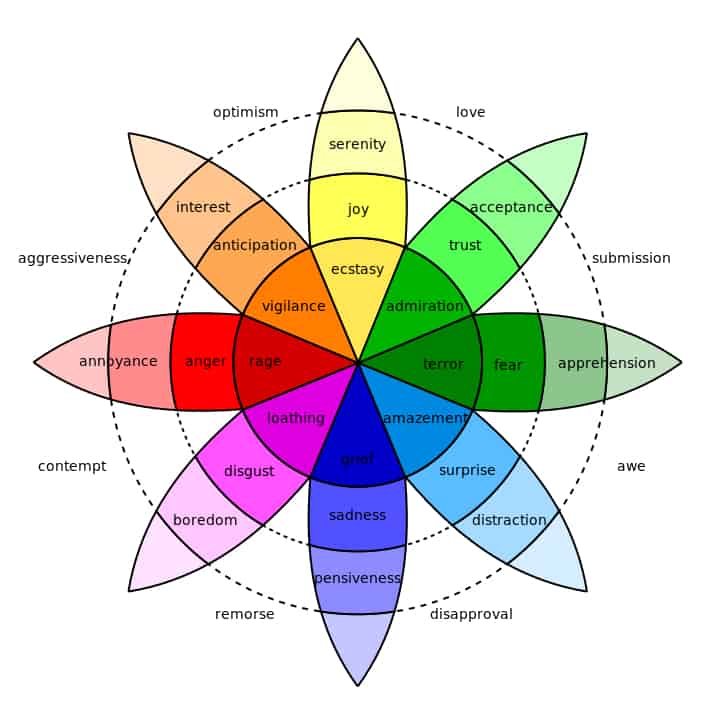
Humans are incredibly complex emotional beings. We experience a vast range of emotions beyond the core/basic emotions. These emotions don’t exist in isolation—our minds and bodies constantly process and combine them, creating rich internal experiences that shape our thoughts, behaviors, and interactions with the world. The feedback loop between emotions and cognition allows us to reinterpret and reshape how we feel.
Table of Contents
- Plutchik’s Emotion Wheel
- Dyad Emotions
- The 24 Plutchik Dyads
- How to Use This New Understanding
- The Anxiety Dyad
Interestingly, emotions are not only stored and processed in the brain. Neuroscientific research confirms that emotions manifest physically in multiple ways. Stress, for example, often tightens muscles in the shoulders, neck, and back. When we consciously relax those muscles through deep breathing or movement, we can reduce stress levels by disrupting that physical-emotional feedback loop (source: Breathing Practices for Stress and Anxiety Reduction: Conceptual Framework of Implementation Guidelines Based on a Systematic Review of the Published Literature, 2023). Furthermore, the gut plays a major role in emotional processing. Our intestines house an extensive neural network called the enteric nervous system, sometimes referred to as the “second brain” because of its dense concentration of neurons and neurotransmitters (Gershon, 1998). This explains why we experience “gut feelings”—scientifically, our intestines communicate directly with the brain via the vagus nerve.
With this in mind, let’s explore compound emotions (dyads) and how they provide a deeper understanding of our emotional lives.
Plutchik’s Emotion Wheel
Psychologist Robert Plutchik developed the Emotion Wheel as a model to categorize emotions and their intensities. His theory suggests:
- Core (Basic) Emotions: Joy, Trust, Fear, Surprise, Sadness, Disgust, Anger, and Anticipation.
- Milder Forms: Serenity, Acceptance, Apprehension, etc.
- Intense Forms: Ecstasy, Admiration, Terror, etc.
- Dyad Emotions: Combinations of core emotions that form new feelings (e.g., Joy + Trust = Love).
Dyad Emotions
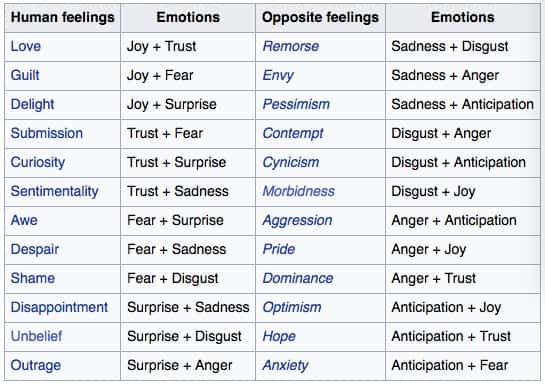
Dyad emotions arise when two core emotions combine. Plutchik identified 24 dyads, each representing a unique blend of emotions. These combinations create entirely new feelings, such as:
- Joy + Trust = Love: The warmth of joy coupled with the safety of trust.
- Fear + Surprise = Awe: The overwhelming sensation we get when something is both astonishing and intimidating.
- Anticipation + Fear = Anxiety: The distressing sensation of expecting something bad to happen.
The 24 Plutchik Dyads
Plutchik organized dyads into three levels: primary (adjacent emotions), secondary (one emotion apart), and tertiary (two emotions apart). This structure helps us understand how emotions build upon one another.
How to Use This New Understanding
Understanding how emotions interact can be incredibly useful. When you recognize that anxiety stems from anticipation and fear, you can break it down into manageable parts and address them individually.
The Anxiety Dyad
Anxiety = Anticipation + Fear
Anxiety is an emotional state rooted in both anticipation and fear. While fear signals immediate danger, anticipation projects that fear into the future, often leading to overthinking and worry.
Anticipation
Anticipation is the cognitive process of preparing for future events. It can be positive (excitement for a vacation) or negative (dreading an upcoming confrontation). When anticipation focuses on negative possibilities, it fuels anxiety.
Fear
Fear is a survival mechanism that helps us respond to threats. However, in the absence of an immediate danger, persistent fear can create chronic anxiety.
Managing Anxiety
To reduce anxiety, consider these approaches:
- Mindfulness: Ground yourself in the present moment instead of spiraling into future concerns.
- Cognitive Reframing: Challenge irrational fears by examining their likelihood.
- Physical Relaxation: Since emotions manifest physically, relaxation techniques like deep breathing help disrupt anxiety patterns.
By breaking down emotions into their core components, you can better understand and manage your feelings.
What the Professionals Say
Emotional Blending and Neuroscience
Research shows that emotions are not isolated but interact dynamically within the brain. Studies in affective neuroscience indicate that the amygdala and prefrontal cortex work together to regulate and blend emotions, influencing behavior and decision-making (Pessoa, 2008). Understanding emotional dyads can enhance self-awareness and emotional intelligence.
Learn more about the fear of fear in the Anticipatory Anxiety post.
Making Sense of What You’re Feeling
If you’re experiencing emotions that feel confusing, contradictory, or overwhelming, you’re not broken. You’re human, and the emotional blending described in this article is happening whether you’re aware of it or not. Individual counseling
helps you untangle those blended emotions, understand what they’re telling you, and respond to them instead of reacting.
Reach out or call (512) 771-7621. Virtual sessions available across Texas.
Want to talk it through?
If this resonates and you would like support, the easiest first step is a free 15-minute call. No paperwork, no pressure, just a short conversation about what is going on and whether my approach is a good fit.
Book a free 15-minute consult
Jonathan F. Anderson, LPC-S
Jonathan is a Licensed Professional Counselor and Board Approved Supervisor with over 25 years of experience. He provides individual, couples, and teen counseling at Gate Healing PLLC, virtually across Texas.