Does Alcohol or Marijuana Help You Sleep?

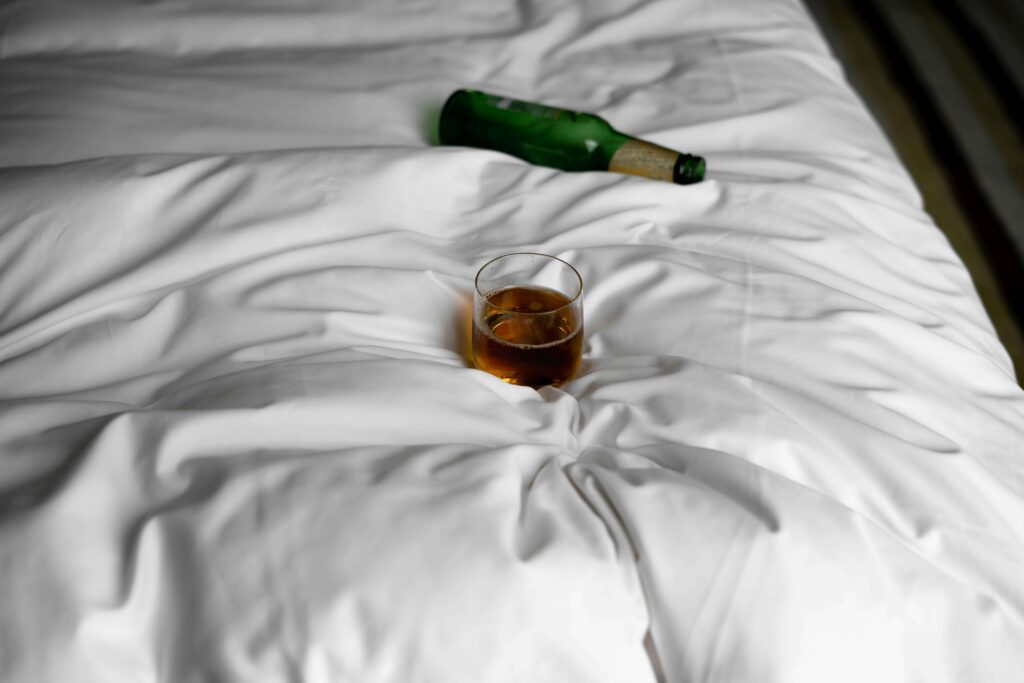
The nightcap. The bedtime edible. The glass of wine that turns into two because it takes the edge off. Using something to get to sleep is one of the most common things people do, and here is the uncomfortable part: both alcohol and cannabis genuinely help you fall asleep. That is exactly what makes them a trap. The problem was never getting to sleep. It is the sleep you actually get, and what happens when you try to stop.
Why Alcohol Backfires
Alcohol is a sedative, so it does what sedatives do. It shortens the time it takes to fall asleep and deepens the first hour or two, and that front half feels genuinely good, which is why so many people reach for it. Then it wears off. As your body clears the alcohol over the next several hours, the sedation flips into its opposite: a rebound of lighter, broken sleep in the back half of the night. A review of the research found this pattern holds at every dose: more consolidated sleep early, more disruption late. That back-half disruption is exactly where the 3 am wake-up lives.
On top of that, alcohol suppresses REM, the dream-rich, emotionally restorative stage of sleep, so even a full seven or eight hours can leave you foggy and flat the next day. It relaxes the muscles in your airway, which means more snoring and worse sleep apnea. It sends you to the bathroom. And the one part that actually helped, the falling-asleep-faster part, is the first thing tolerance takes away. The more regularly you drink to sleep, the less it helps you drift off and the more it chops up everything after.
Why Cannabis Backfires, Just Differently
Cannabis reaches a similar destination by a different road. THC helps many people fall asleep, and at higher doses it tends to cut into REM the same way alcohol does. With regular use, the fall-asleep benefit fades as tolerance builds, so it takes more to get the same effect.
But the real catch shows up on the nights you skip it, or once you have leaned on it for a while. Sleep turns lighter and more broken, often with a rebound of unusually vivid or unsettling dreams as the REM your body had been suppressing comes flooding back. That withdrawal effect is the most consistent finding in the research on cannabis and sleep, and it is the thing that quietly turns “I just use it to fall asleep” into “I can’t sleep without it.” The tool becomes the problem it was supposed to solve.
The Trap They Share
Strip away the differences and alcohol and cannabis run the same play. Both work by sedating you, and sedation is not the same as sleep. They get you unconscious faster while quietly degrading the architecture underneath, less REM, more fragmentation, worse continuity, so you spend the night technically asleep and wake up feeling like you barely slept.
And both start the same loop. The thing you use to fall asleep makes your own, unassisted sleep worse, so you rely on it more, which makes your own sleep worse still. That loop is one of the most common ways an occasional sleep aid hardens into chronic insomnia. At some point the substance is no longer helping you sleep through a rough patch. It has become the rough patch.
What Actually Works Instead
The durable fix is not a better sedative. It is getting your sleep to come on its own again, which means dealing with why it stopped rather than covering it over each night. That is what CBT-I does. It is the recommended first-line treatment for chronic insomnia, it targets the arousal and the learned associations that substances only paper over, and it does not trade one dependency for another. In the meantime, the ordinary anchors still matter: a steady wake time no matter how the night went, getting out of bed when you are wired instead of lying there fighting it, and dealing with the day’s worry before it follows you to bed rather than at 3am.
One honest heads-up. If you have been using alcohol or cannabis to sleep for a while, the first stretch without it is usually rough. Sleep often gets worse before it gets better as your body recalibrates, and that rebound is temporary, not evidence that you actually need the substance. Knowing it is coming makes it easier to ride out. And if cutting back feels genuinely hard, or the amount has quietly crept up over the years, that is worth talking through with someone rather than white-knuckling it alone.
With heavy alcohol use, particularly for an extended period of time, quitting cold-turkey can be very dangerous; please talk to your doctor before making major changes.
When to Get Help
If you cannot fall asleep without a drink or an edible, or the sleep problem has outlasted whatever started it, that is the point where it is worth treating the sleep directly instead of managing around it forever. Insomnia counseling and CBT-I is a short, structured way to get there, and most people finish in four to eight sessions. You do not have to keep choosing between a bad night and a substance that makes the next one worse. There is a way out of that loop, and it does not come in a glass or a gummy.
Additional Reading
If sleep has become something you have to manufacture, these go further:
- Understanding Insomnia: what keeps chronic insomnia going after the original trigger is gone.
- Why Do I Wake Up at 3am?: the back-half waking that alcohol makes worse, explained.
- Recurring Nightmares: where the vivid-dream rebound comes from and how to settle it.
- Understanding Addiction: if the use has become more than a nightcap, an honest look at the pattern.
Want to talk it through?
If this resonates and you would like support, the easiest first step is a free 15-minute call. No paperwork, no pressure, just a short conversation about what is going on and whether my approach is a good fit.
Book a free 15-minute consult
Jonathan F. Anderson, LPC-S
Jonathan is a Licensed Professional Counselor and Board Approved Supervisor with over 25 years of experience. He provides individual, couples, and teen counseling at Gate Healing PLLC, virtually across Texas.