Understanding Insomnia: Why You Can’t Sleep and What Actually Works

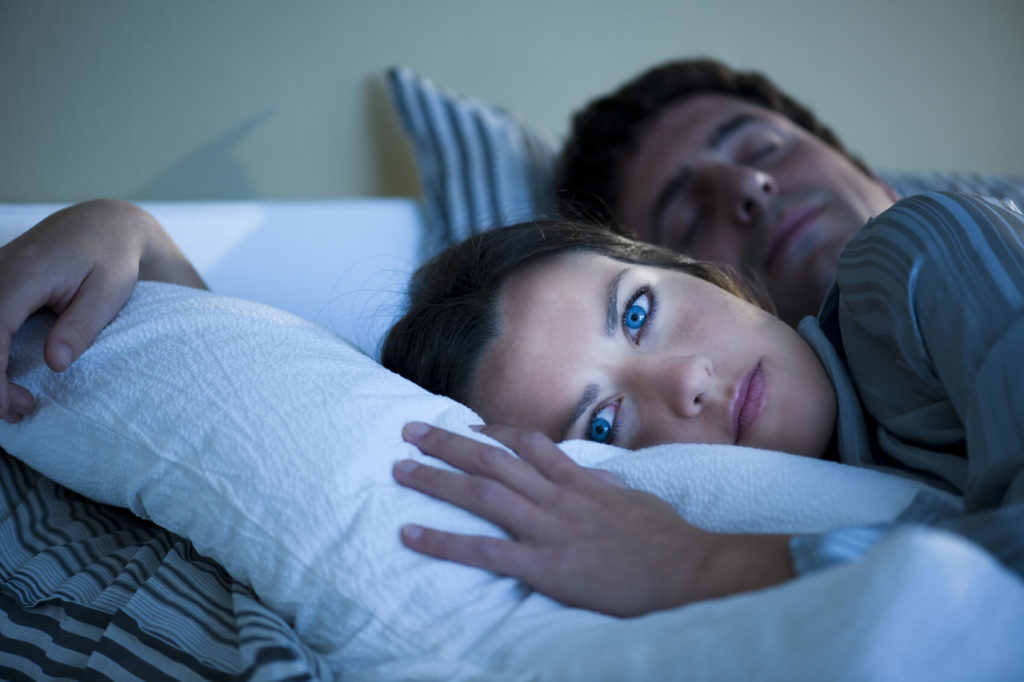
You are lying in the dark doing arithmetic. If you fall asleep right now, that’s five hours and forty minutes. If you fall asleep in twenty minutes, that’s five hours and twenty. You have done this math so many times you no longer need to think about it, which is unfortunate, because the math is one of the things keeping you awake.
Chronic insomnia is not a character flaw. It is not a discipline problem. It is a specific, well-understood condition with a specific, well-tested treatment, and almost nobody gets told what that treatment is. They get told to try chamomile.
What Chronic Insomnia Actually Is
There is a clinical line, and it is worth knowing where it sits. Chronic insomnia means trouble falling asleep or staying asleep at least three nights a week, for at least three months, with real consequences during the day.
That last part is doing a lot of work. If you sleep six hours and feel fine, you are a short sleeper, not an insomniac. Insomnia is defined by the daytime as much as the nighttime: the fog, the irritability, the sense of moving through the day underwater.
Three months is the other threshold. A bad month after a death in the family is not chronic insomnia. It is a normal nervous system responding normally to something awful. Chronic insomnia is what happens when that bad month does not end.
The Three Things That Built It
Sleep researchers describe insomnia as having three ingredients, and it explains almost everything about why yours has not gone away.
What you brought. Some people are simply wired to sleep lightly. An anxious temperament, a family history of poor sleep, a nervous system that runs a little hot. This is the loaded gun, and it does nothing on its own. Plenty of people carry it their whole lives and sleep fine.
What set it off. A newborn. A divorce. A layoff. A diagnosis. A stretch of work that ran you into the ground. Something happened, and for a while you could not sleep, and that made complete sense.
What is keeping it alive. Here is the part that matters, and the part almost nobody tells you: it is not the first two. The trigger is usually long gone. What is maintaining your insomnia right now is everything sensible you started doing in response to it.
Your Coping Strategies Are the Problem
This is the hardest thing to hear and the most important.
You started going to bed earlier, to give yourself a better shot. You started sleeping in on the weekend, to catch up. You started lying down at nine-thirty because you knew it would take a while. You cut back on your morning run because you were too exhausted. Every one of those decisions was reasonable. Every one of them made your insomnia worse.
Two mechanisms, and once you see them you cannot unsee them.
You broke your sleep drive. Sleep pressure builds the entire time you are awake. It is chemical, it is measurable, and it is the thing that makes you fall asleep. Every hour you spend in bed not sleeping, every nap, every extra hour on Saturday morning, bleeds that pressure off. So you arrive at bedtime with less of the one biological force that would have put you under. Then you spend even longer in bed trying to compensate, which bleeds off even more. That is a loop, and it tightens on its own.
You taught your body that bed means danger. Think about what has actually happened in that bed for the last several months. You have lain there tense. You have watched the clock. You have run the arithmetic. You have felt the dread arrive at eleven and the panic arrive at three. Your nervous system is a learning machine, and it has learned. The bed is no longer a cue for sleep. It is a cue for vigilance.
This is why you can fall asleep instantly on the couch during a show you are not even watching, and then be wide awake, eyes open, heart going, the second your head touches the pillow. That is not random. That is a conditioned response, and it is doing exactly what it learned to do.
The Harder You Try, the Worse It Gets
Sleep is one of a small set of things that you cannot achieve by effort. You cannot try to sleep. Trying is an act of arousal, and arousal is the opposite of sleep.
So the whole apparatus you have built, the tracking, the optimizing, the ring on your finger giving you a score every morning, the strategizing about what time to lie down, is not neutral. It is effort. And effort is the thing standing between you and sleep.
This is genuinely strange, and it is why insomnia does not respond to the approach that works for most other problems in your life. You are a capable person. When something is broken, you work harder at it. Sleep punishes that instinct specifically.
Why Sleep Hygiene Did Not Work
Because it was never designed to.
Sleep hygiene is the list you already know. Dark room. Cool room. No screens. No caffeine after noon. Consistent wake time. These are reasonable habits, and they are worth having.
They are also, on their own, not a treatment for chronic insomnia. That is not a contrarian take. It is the formal position of the field. Sleep hygiene is a supporting component within a real protocol, and every serious guideline is explicit that it does not work as a stand-alone therapy.
So if you have been dutifully following the advice for a year and getting nowhere, understand what actually happened. You were handed the garnish and told it was the meal. That is a failure of the advice, not a failure of yours.
What Actually Treats It
Cognitive Behavioral Therapy for Insomnia. CBT-I. The National Heart, Lung, and Blood Institute names it as the recommended first treatment for long-term insomnia, ahead of medication, and every major clinical guideline agrees.
It works because it goes directly at the two mechanisms above rather than at the symptom.
It rebuilds your sleep drive. You keep a sleep diary. It reveals how much you are actually sleeping, which is almost never what you assume. Then you compress your time in bed to match your real sleep time. This is the part nobody wants to hear and the part that does the work. It is temporary, it is calculated from your own numbers, and the window widens back out as your sleep consolidates.
It breaks the bed-and-wakefulness association. A small set of rules that sound too simple to matter. Bed is for sleep. If you are awake and frustrated, you get up. It is a learned association, and it can be un-learned.
It goes after the thinking. The 3 a.m. arithmetic. The eight-o’clock dread. The certainty that tomorrow is already ruined. Those thoughts manufacture the arousal that keeps you awake, so they get worked on directly, and tested against what your own diary actually shows.
It brings the arousal down. Practical, trainable ways to settle a nervous system that has been running hot for months.
Four to eight sessions, usually. It is one of the shortest evidence-based protocols in mental health, and it is designed to end. More on how CBT-I works and what treatment looks like.
This Is Not the Same as Sleep Procrastination
Worth separating cleanly, because the two get confused constantly and they are different problems.
Sleep procrastination is when you could sleep and you choose not to. You stay up scrolling, watching one more episode, reclaiming the only hours of the day that belong to you. You would fall asleep in five minutes if you went to bed. You are not going to bed.
Insomnia is when you go to bed and cannot sleep.
The distinction is choice versus capacity, and it matters because the treatments have nothing in common. CBT-I does not fix sleep procrastination. Sleep procrastination is a self-regulation problem, and it usually points at something in your daytime life that is not working. If that is the pattern you recognize, this is the piece you want.
A fair number of people have both.
When It Is Not Insomnia at All
Some sleep problems are not psychological, and no amount of therapy will touch them.
If you snore, if you wake up gasping, if you sleep eight hours and still feel destroyed, that could be obstructive sleep apnea, and it needs a sleep study. If your legs crawl and twitch at night, that could be restless legs syndrome. If you are not so much unable to sleep as biologically wired to a later clock, trapped in a seven-a.m. world, that is a circadian rhythm problem and it is treated differently.
These are medical conditions. They get diagnosed by physicians and sleep centers. A good therapist screens for them, tells you plainly what they are seeing, and points you at the right door. It is entirely possible to have insomnia alongside sleep apnea, and CBT-I still helps in those cases. But you should know which problem you are actually solving before you spend two months solving the wrong one.
Where to Start
If you have been sleeping badly for three months or more and it is costing you something during the day, you have chronic insomnia, and it is treatable. Usually faster than people expect, and usually without medication.
The first thing to understand is that this is not about trying harder. You have already tried harder. That is part of what got you here.
Additional Reading
Sleep does not sit by itself. It gets tangled up with mood, with anxiety, with everything your nervous system is carrying. A few related pieces:
- Insomnia and Sleep Procrastination: the difference between choosing to stay up and being unable to sleep, and why it changes what helps
- Why Do I Wake Up at 3am?: Causes and How to Fall Back Asleep
- Does Alcohol or Marijuana Help You Sleep?: why the drink or edible that helps you fall asleep quietly makes the night worse
- Understanding Anxiety: the anxiety-insomnia loop, and how each one feeds the other
- Understanding Depression: Signs, Causes, and What Actually Helps: why treating the sleep often lifts the mood, rather than the other way around
- Stress and Relaxation: bringing down a nervous system that has been running hot for months
Want to talk it through?
If this resonates and you would like support, the easiest first step is a free 15-minute call. No paperwork, no pressure, just a short conversation about what is going on and whether my approach is a good fit.
Book a free 15-minute consult
Jonathan F. Anderson, LPC-S
Jonathan is a Licensed Professional Counselor and Board Approved Supervisor with over 25 years of experience. He provides individual, couples, and teen counseling at Gate Healing PLLC, virtually across Texas.