
Caregiver Boundaries: How to Protect Yourself Without Losing the Relationship

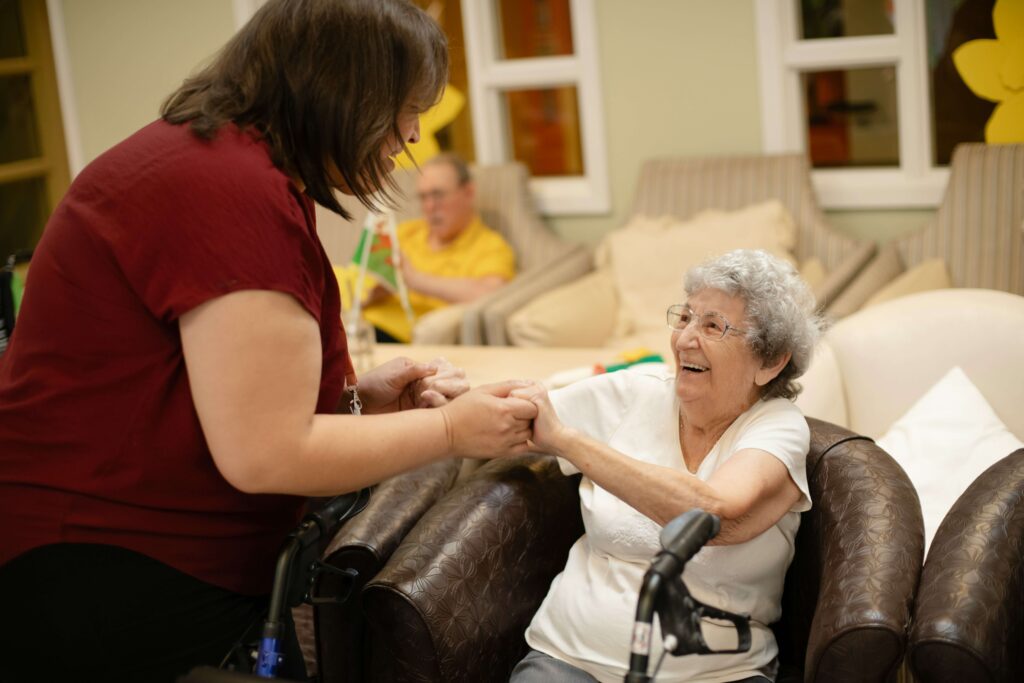
If you are caring for someone you love, you already know the role can quietly take over your life. You may have started with a few errands or appointments, and somewhere along the way it became most of your waking hours. You are not imagining the scale of it. The 2025 Caregiving in the US report from AARP and the National Alliance for Caregiving found that 63 million Americans, roughly one in four adults, are now family caregivers, often for five years or longer and at an average of 27 hours a week.
I was recently quoted in Counseling Today, the American Counseling Association’s flagship magazine, for a July 2026 feature on counseling modern caregivers. Two themes I returned to in that conversation are the same ones I see hold caregivers back most often in my own practice: boundaries and grief. This is a closer look at both.
Why caregiver boundaries are different
Most boundary advice imagines two separate people deciding how much space to keep between them. Caregiving rarely works that way. You are often bound to the other person by love, history, obligation, and the practical reality that they depend on you. As I told Counseling Today, “Boundaries, inherently, are designed to protect your sense of self, your well-being and your energy supplies.” They are not walls you put up to push someone away. They are the thing that lets you keep showing up without disappearing into the role.
I find it helps to picture boundaries as shifting, sometimes overlapping zones rather than a single hard line. You and the person you care for share a great deal, and that overlap is part of the relationship. The goal is to keep the overlap from swallowing you whole, which is where the slide into resentment and exhaustion usually begins. Holding a clear sense of where you end and the other person begins is what keeps the relationship from tipping into the kind of enmeshment that hurts you both.
The guilt that makes boundaries feel impossible
For a lot of caregivers, the obstacle is not finding the time. It is the belief that resting is selfish, unsafe, or a sign that they are failing the person who needs them. If that is the story underneath, then a cheerful reminder to “practice self-care” lands as one more thing to feel guilty about. It can increase the shame rather than ease it.
This is why I approach caregivers with what I think of as compassionate curiosity. Before any technique, I want to understand the fear that sits beneath the over-functioning. Often a caregiver feels that any minute spent on themselves is a minute stolen from someone who is suffering. Naming that belief out loud, and treating it with respect rather than correction, is usually the real starting point. If the idea that your needs matter feels foreign, you might find my piece on healthy selfishness a gentler entry point.
Practical ways to set caregiver boundaries
Once the guilt has been named, the work becomes concrete. A few things that tend to help:
- Start small and specific. An early boundary can be as modest as a few uninterrupted minutes alone. You build from there. Vague intentions (“I need more time for myself”) rarely hold, so name the actual thing.
- State boundaries affirmatively, and define the exceptions. For example, “I need personal time after 8 p.m.” Then make clear that unless there is a genuine emergency, and define plainly what counts as one, they should reach a backup person rather than you. A boundary without a defined exception tends to collapse the first hard night.
- Use “I” statements that name the feeling. “I feel worn down when I am kept up late, especially before an early appointment” gives the other person something real to respond to. This advice is old because it works.
- Respect the other person’s boundaries too. The person you care for is also losing autonomy, and that loss is its own grief. Asking permission before helping, and letting them do what they safely can even when it is slower or imperfect, restores dignity and trust on both sides.
- Expect it to feel worse before it feels better. Breaking a long pattern can stir up sadness and anxiety. That discomfort is not a sign you did something wrong. It is the cost of building something sustainable.
When the pressure is coming from a job on top of the caregiving, the boundary work extends into your week as a whole. I write more about that in my guide to work-life balance, and about the slow depletion of burnout and compassion fatigue.
The grief that runs underneath
Boundaries protect your energy. Grief is what often drains it without anyone naming the loss. Many caregivers are living with anticipatory grief, what I described to Counseling Today as a “double whammy” of grieving an oncoming loss while still caring for the person in front of you. You are mourning and providing at the same time, and the mourning has no obvious place to go.
It can be sharper still when the person is physically present but changed, as with dementia or a serious illness, so you are grieving someone who has not left. If any of this sounds like your experience, my post on anticipatory grief goes deeper, and you do not have to carry it on your own.
When to reach out
You do not need to be in crisis to deserve support. If the role has taken over your sense of who you are, if rest feels impossible to justify, or if you are quietly grieving a person who is still here, those are good reasons to talk with someone. Working through this with a counselor is not about doing less for the person you love. It is about staying whole enough to keep doing it. If that fits where you are, you can learn more about how I work on the individual counseling page.
Additional Reading
If this resonated, these related pieces go further into the themes above.
- Anticipatory Grief (Pre-Grief) grieving a loss that has not fully arrived yet
- Burnout and Compassion Fatigue what chronic caregiving does to your reserves over time
- Healthy Selfishness why tending to your own needs is not a betrayal of anyone
- Codependency when caring for someone slides into losing yourself in them
Want to talk it through?
If this resonates and you would like support, the easiest first step is a free 15-minute call. No paperwork, no pressure, just a short conversation about what is going on and whether my approach is a good fit.
Book a free 15-minute consult
Jonathan F. Anderson, LPC-S
Jonathan is a Licensed Professional Counselor and Board Approved Supervisor with over 25 years of experience. He provides individual, couples, and teen counseling at Gate Healing PLLC, virtually across Texas.